

Qatar is a destination that surprises from the very first glance.
It is not only a land of futuristic skyscrapers and luxury, but also a place where tradition and innovation coexist naturally.
Located on a small peninsula facing the Persian Gulf, the country alternates the charm of the desert with calm coasts and modern urban spaces. Here the desert dialogues with futuristic architecture, while culture remains deeply rooted in daily life, markets, and landscapes.
Traveling in Qatar means slowing down, observing, and letting oneself be guided by contrasts that tell an ancient story projected towards tomorrow.
What to See: Doha, the Modern Capital Between Skyline, Culture, and Local Identity
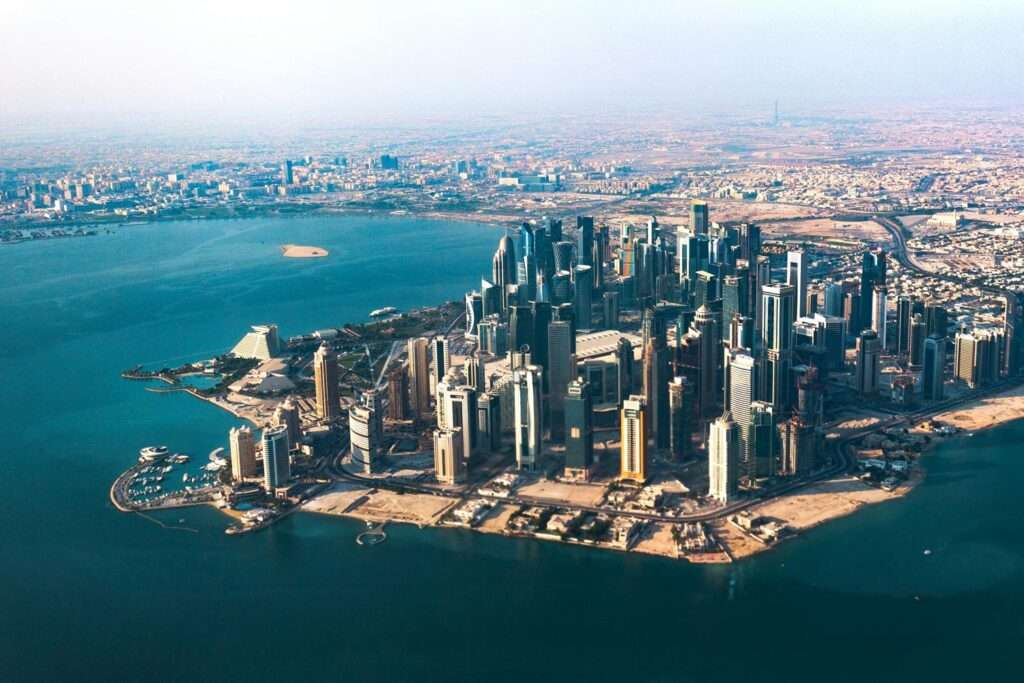
A trip to Qatar almost always begins in Doha, a modern and cosmopolitan capital overlooking the Persian Gulf. It is an elegant and orderly city where international communities coexist with a strong local identity.
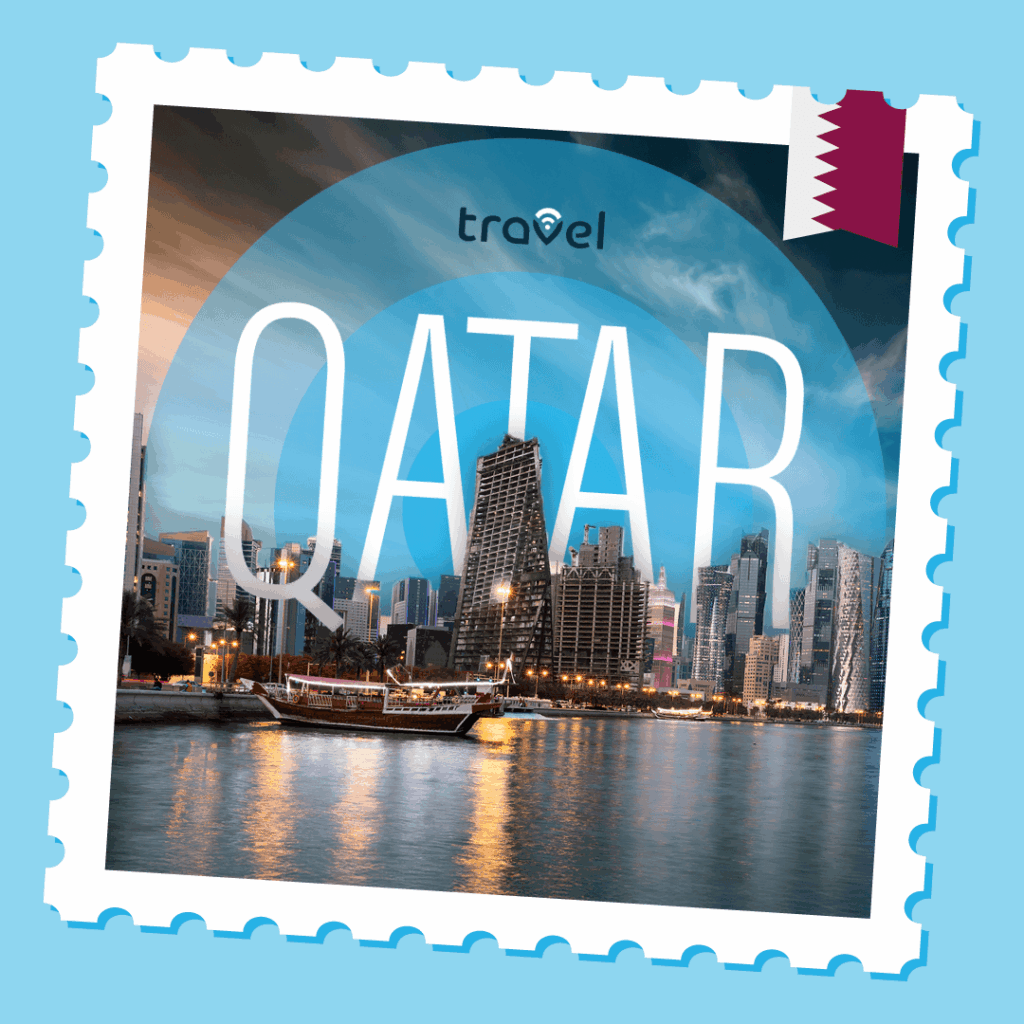
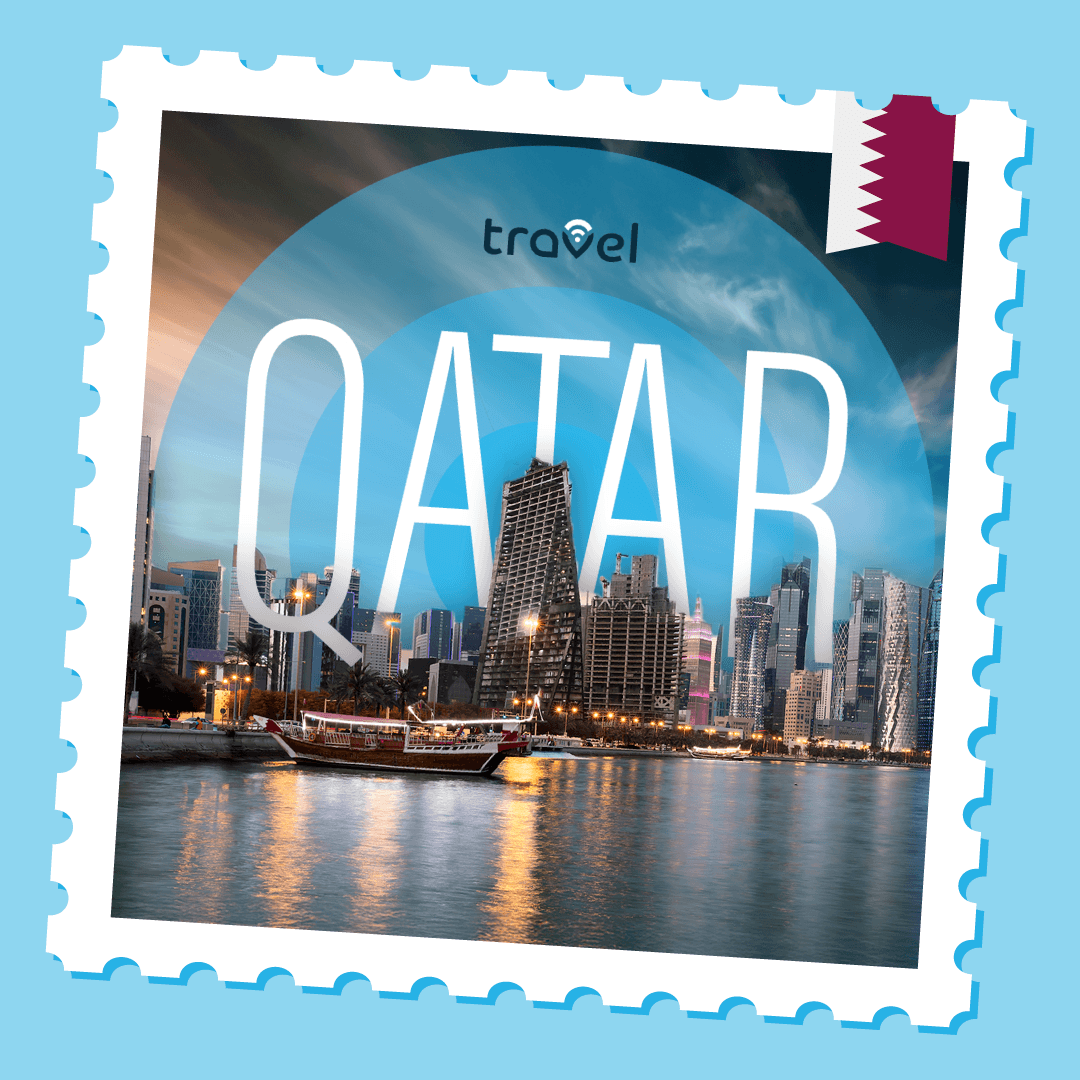
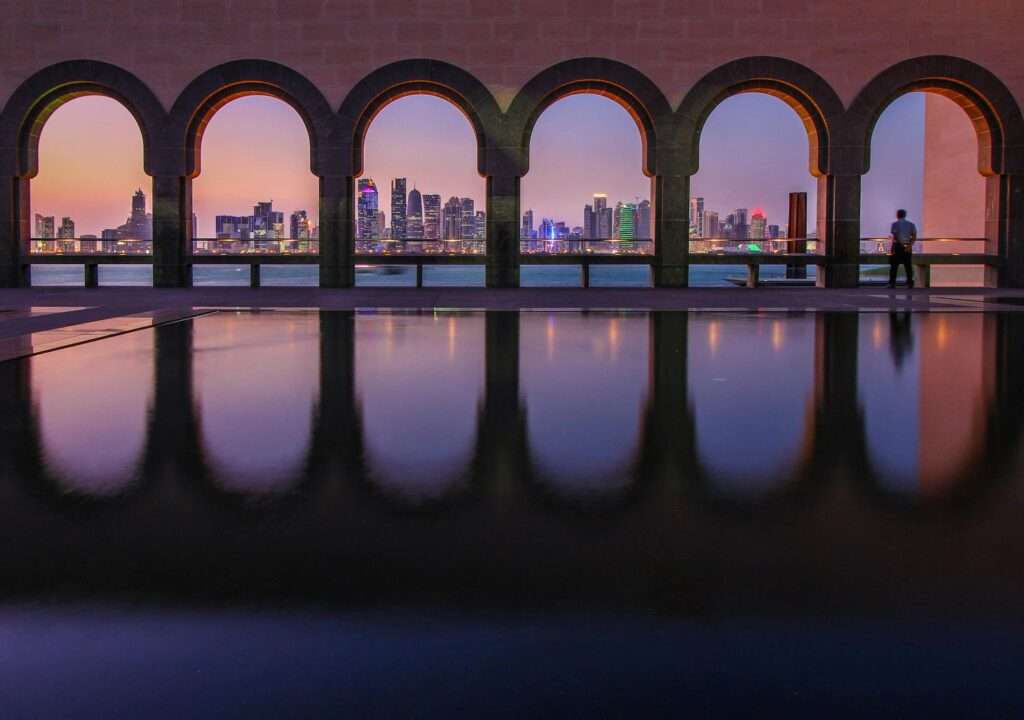
Walking along the Corniche, the waterfront that embraces the city, Doha’s skyline reveals its full grandeur. At sunset, the West Bay towers reflect on the water, offering one of the most iconic views of the country and showcasing its contemporary soul.
The Museum of Islamic Art is an essential stop. It is not only one of the most important museums in the Middle East but also an architectural masterpiece that houses centuries of Islamic art and culture. Nearby, Msheireb Downtown represents an urban project that reinterprets traditional architecture, with sustainable buildings and spaces designed to respect the climate, traditions, and community life.
In the heart of the city, Souq Waqif, Doha’s most authentic face, offers a sharp contrast to modern Doha. Between stone alleys, the scents of spices, and artisan shops, visitors experience everyday Qatari life. It is the ideal place to taste typical dishes like machbous or a mixed grill, drink spiced karak chai, or simply watch families and workers gather in open-air cafés, away from the polished image of skyscrapers.
What to See: Qatar’s Desert, Sea, and History Beyond Doha
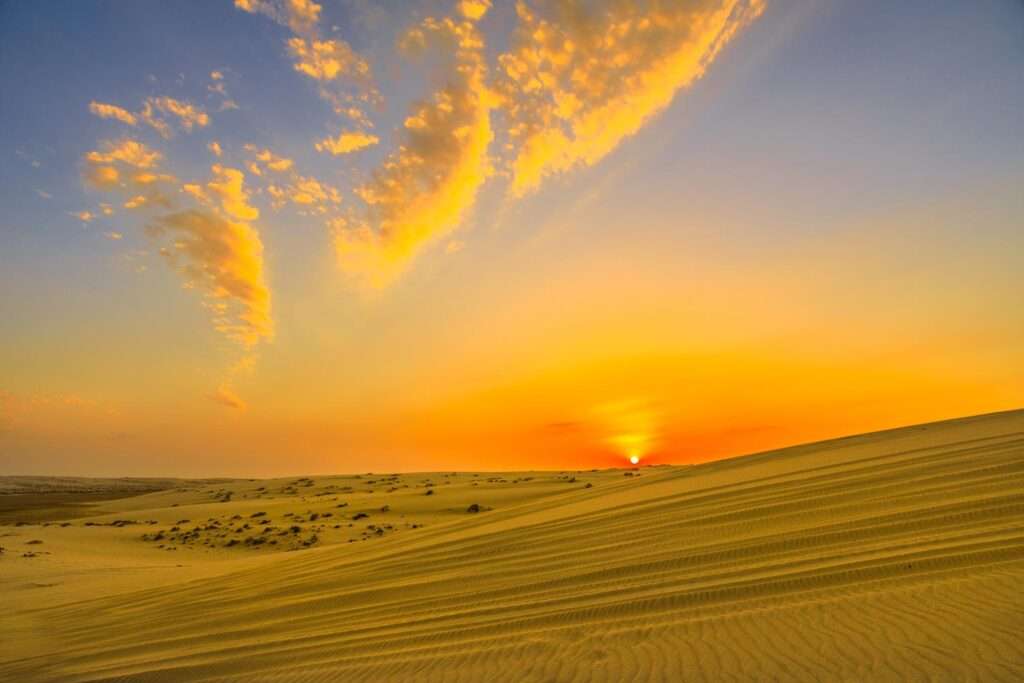
Away from the capital, Qatar reveals its most essential face. The landscape becomes open and silent, dominated by desert and sea.
The Qatar Desert and Khor Al Adaid
The UNESCO natural reserve of Khor Al Adaid, also known as the Inland Sea, is one of the few places in the world where the sea meets the desert. The high, soft dunes change color throughout the day, making every visit unique.
A 4×4 excursion, a sunset walk, or spending a night in a Bedouin camp allows visitors to experience the desert authentically under a starry sky.
Al Zubarah and the Historical Roots of the Country
Qatar’s history emerges strongly at the Al Zubarah archaeological site, a UNESCO World Heritage Site. Among the ruins of an ancient fishing village and the 18th-century fortress, one discovers the period when the country was an important center for pearl trade and fishing.
Sea, Nature, and Relaxation in Qatar
Qatar is not only desert. Its coasts offer calm beaches and clear waters, like those of Katara or the islands reachable by boat from Doha’s port.
In the Al Thakhira area, mangroves create an unusual ecosystem for the region, explorable by kayak and home to migratory birds.
Qatari Cuisine: Between Arab Tradition and International Flavors
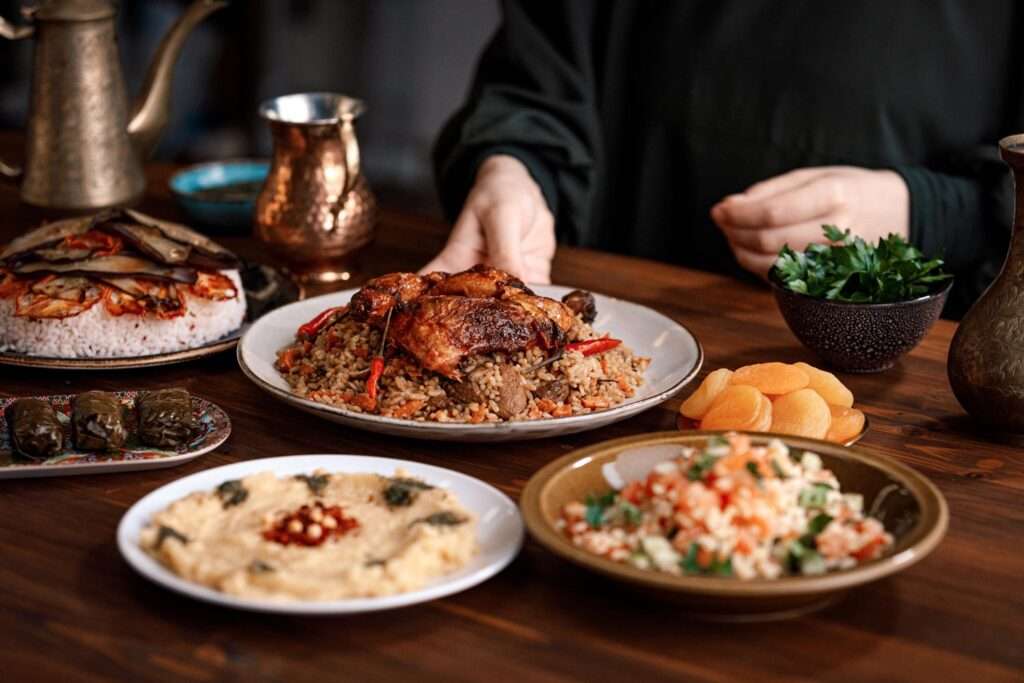
Qatari cuisine reflects its geographical location and history. Spiced rice is the base of many dishes, often accompanied by lamb, chicken, or fish. It is a mix of Arab tradition with Indian and North African influences. Machbous is one of the signature dishes, as is madrouba, a creamier and more delicate dish, especially popular during Ramadan.
Arabic coffee, served in small handleless cups and flavored with cardamom, is a central element of hospitality. It is a gesture of welcome and respect, integral to local culture, often accompanied by dates.
Traditions, Culture, and Events in Qatar: What to Know Before Traveling
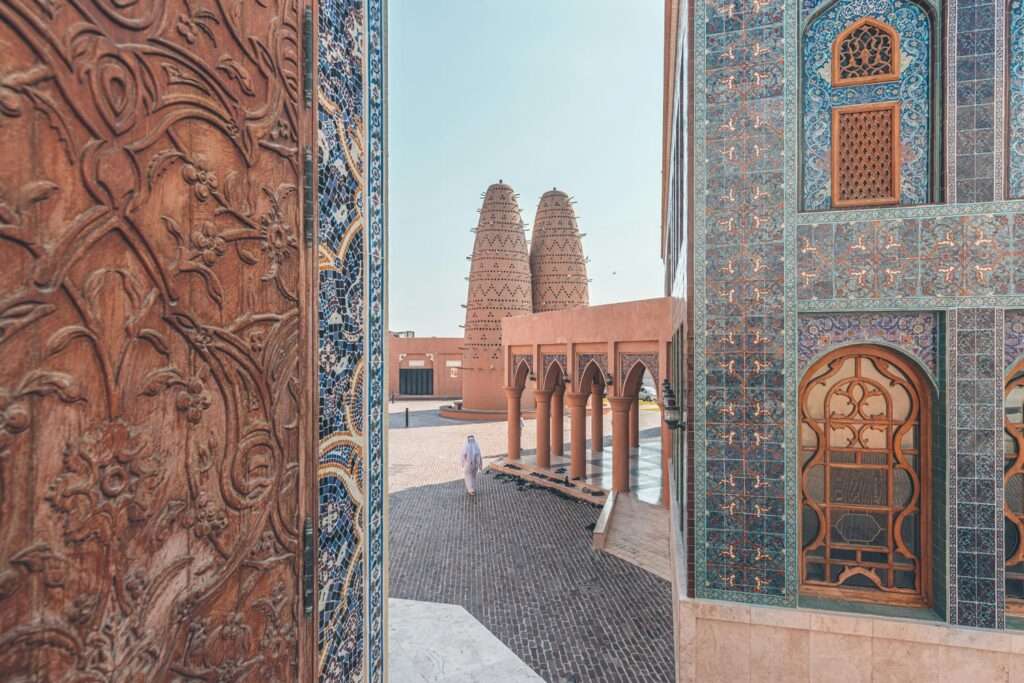
Qatari society is strongly connected to its traditions. The majlis, a space for meeting and dialogue, continues to play a central role in social life. Scents such as oud and bukhoor accompany ceremonies and daily moments, creating an unmistakable sensory identity.
During Ramadan, it is important to respect local customs by avoiding eating, drinking, or smoking in public during daylight hours. In the evening, after iftar, the cities come alive and restaurants fill up again. Hotels remain organized to host visitors discreetly and respectfully.
Besides traditional events, Qatar offers numerous festivals and events that allow visitors to experience culture directly. From December to March, occasions like Qatar National Day are celebrated with parades, shows, and festivities across Doha. Sports enthusiasts can attend international events such as the Qatar Open tennis tournament, MotoGP, or Formula 1, while the cultural scene includes film festivals by the Doha Film Institute, concerts, and performances at Katara Cultural Village.
Useful Information for Traveling in Qatar
When to Go to Qatar: Ideal Climate
The best period is from November to March, when temperatures are pleasant and perfect for visiting cities and the desert.
April and October are good transitional months.
From June to September, it is very hot, with temperatures that can exceed 40°C.
Qatar is in the Arabian Standard Time zone (GMT+3), with no daylight saving time changes.
Entry Documents for Qatar: Visa or Passport?
To enter Qatar, a passport with at least six months’ validity is required. A tourist visa can be obtained on arrival for short stays.
Is Qatar Safe? How to Behave and Dress
Qatar is considered one of the safest countries in the Middle East, with low crime rates and high levels of security. It is still advisable to behave respectfully according to local norms.
As a Middle Eastern country, Qatar has conservative laws and customs. Travelers are generally welcomed without issues as long as they maintain discretion and respect for local traditions. Public displays of affection should be avoided to respect local culture.
Dress is generally modest in public, with shoulders and knees covered. In hotels and private beaches, rules are more flexible.
Alcohol consumption is only allowed in hotels, licensed restaurants, and specific venues, and drinking in public is prohibited.
The official language is Arabic, but English is widely spoken.
Internet Connection in Qatar: Stay Online with Manet Travel eSIM
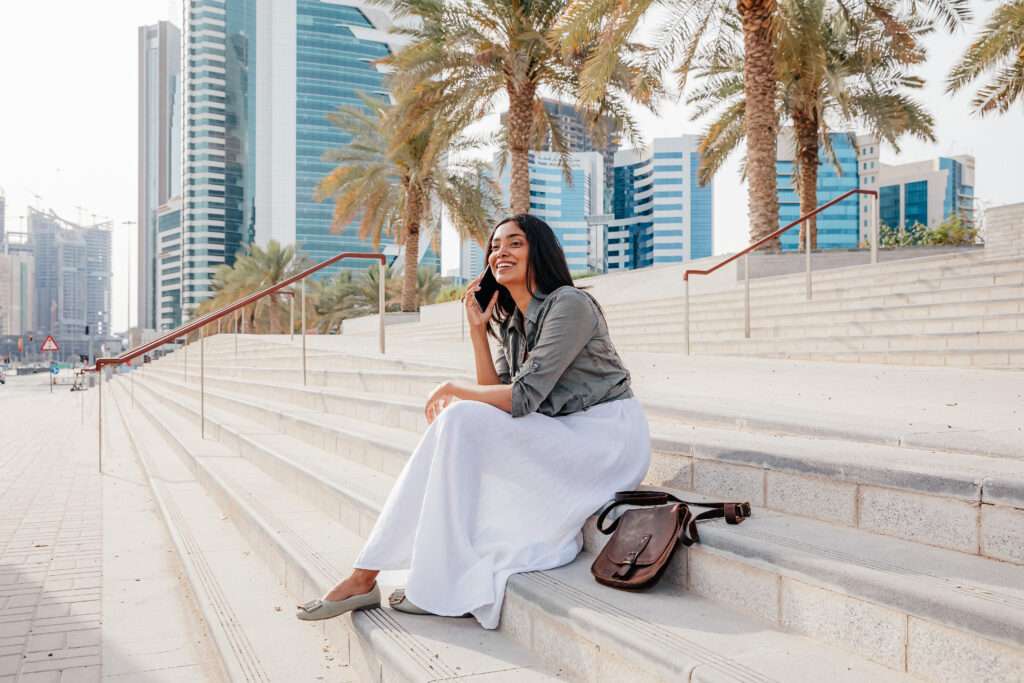
Whether exploring desert dunes, walking through Souq Waqif’s alleys, or admiring Doha’s futuristic skyline, having a stable internet connection makes every experience easier and more immediate.
In Qatar, where tradition and modernity intertwine in every corner, staying online means navigating easily, sharing unique moments, and enjoying the country without worries. For international travelers, Manet Travel eSIMs for Qatar allow staying connected from the moment of arrival, without searching for shops or replacing physical SIMs. Moving around, communicating, and discovering Qatar becomes more convenient and uninterrupted.
Traveling in Qatar means letting yourself be surprised: a country that unites past and future, traditional culture and innovation, offering authentic and unforgettable experiences at every step. Connect with Manet Travel and enjoy Qatar worry-free, from the city to the desert, in complete freedom.